We value your privacy
We use cookies to enhance your browsing experience, security, and analyse our traffic. By clicking "Accept All", you consent to our use of cookies.
Customise
Decline
Accept All
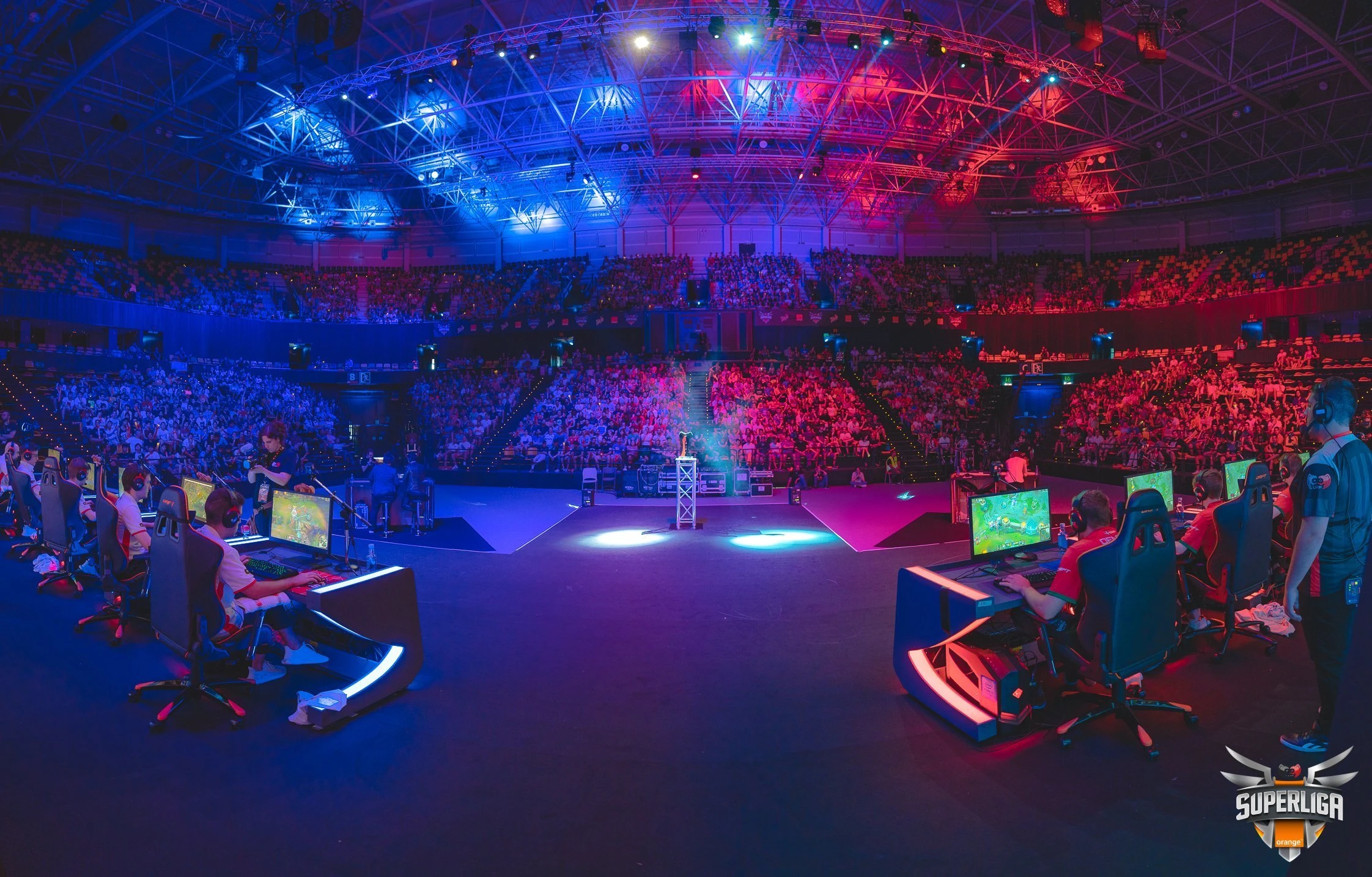
Esports are leagues, competitive circuits, tournaments, or similar competitions in which individuals or teams play video games, for entertainment, prizes, or
money, typically in front of spectators, either in-person or online. Esports are an important and growing part of the video game industry. Video games are at the centre of the esports ecosystem. Without compelling video game content, there would be no esports.
The following elements characterise esports:
Video games exist in a different ecosystem than sports. Our members’ products are regulated under consumer and minor protection laws, consumer contract laws, IP laws, taxation and company laws, and much more, at European and national levels. Sport laws cannot, and should not, be applied to them. Applying sports laws would be detrimental to European esports stakeholders and their ability to compete in the global market. When compared to sports, esports exhibit a higher degree of unification or harmonisation, allowing for a thriving, interconnected national/European ecosystem.
[1] European Court of Justice (C-355/12): The Court of Justice of the European Union was asked for a preliminary ruling on the interpretation of Article 6 of the Copyright Directive (Directive 2000/29/EC) in proceedings before the Italian courts between Nintendo and PC Box concerning the sale by the latter of so-called ‘mod chips’ and ‘game copiers’. In the course of its ruling, the Court said that video games “constitute complex matter comprising not only a computer program but also graphic and sound elements, which, although encrypted in computer language, have a unique creative value which cannot be reduced to that encryption. In so far as the parts of a videogame, in this case, the graphic and sound elements, are part of its originality, they are protected, together with the entire work, by copyright in the context of the system established by Directive 2001/29.”